

Echoes from Poznań: Evidence and Ripple Effects of Restorative Justice
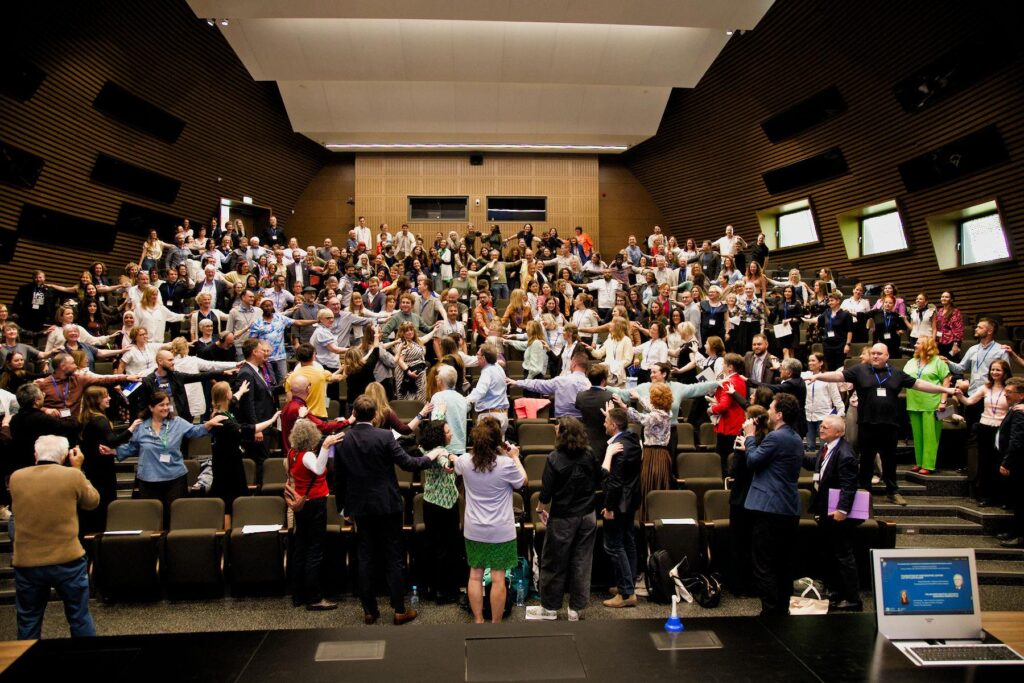
Last June, we had the pleasure of attending the 13th Conference of the European Forum for Restorative Justice (EFRJ), held in the historic city of Poznań, Poland. The event, entitled “Echoes of Restorative Encounters: Voices, Evidence and the Ripple Effects of Restorative Justice in Action”, brought together more than 300 practitioners, researchers, policymakers and activists from across the world at SWPS University.
Taking part in this space was a key opportunity to compare our areas of work with the current debates within the international movement. Throughout the conference, the focus was on rethinking how we demonstrate that restorative justice truly has a transformative impact. The rigidity of traditional quantitative analyses—which often focus solely on numerical data, such as the number of cases closed—was called into question, while evaluation methodologies based on ethical integrity, the value of human relationships, and the active participation of affected communities were advocated.
One of the most practical takeaways from the conference was the understanding of restorative justice not only as a tool for intervention within the criminal justice system, but also as an approach to social transformation with systemic impact. The so-called “ripple effects” (ripple effects) show that healing a damaged relationship can strengthen the wider social fabric, helping to build more participatory and cohesive communities and structures.
At Iniciativas de Justicia Transformadora, we are committed to incorporating these learnings into our day-to-day work, addressing conflicts at their roots and supporting communities, companies and organisations in building a form of justice that is less punitive and more intersectional.


 English (UK)
  Español